

Holiday Electrical Safety: Get Your Home Ready
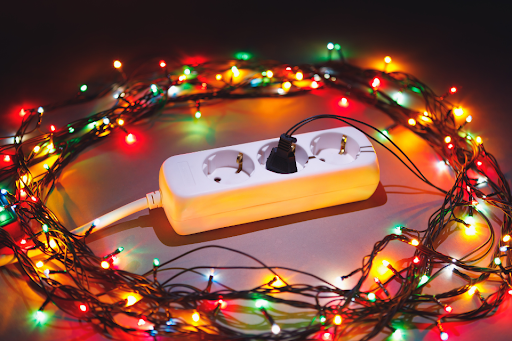
The holidays put extra demand on your home’s electrical system. Christmas lights, inflatable yard decorations, illuminated displays, and seasonal electronics all draw power, often through extension cords and power strips that stay plugged in for weeks. Most of this works fine, but damaged cords and overloaded circuits are common causes of holiday fires and injuries. The U.S. Consumer Product Safety Commission (CPSC) says about 15,000 people are treated in hospital emergency departments nationwide for holiday decorating incidents in November and December.
A few simple checks before you decorate can prevent most of these problems. This guide covers what to inspect, which warning signs to take seriously, and when to call a licensed electrician.
Why Does Holiday Decorating Raise Electrical Risks?
Holiday decorating raises electrical risks because it adds load to circuits that already run your everyday appliances, and it relies on temporary wiring such as extension cords. Lights often go up in places that see weather, foot traffic, and storage damage, such as porches, roofs, and trees.
The risk isn’t limited to lights. The U.S. Fire Administration notes that almost one-third of home Christmas tree fires are caused by electrical problems. Many of those problems start with something you can spot ahead of time.
How Do I Prepare My Home’s Electrical System for the Holidays?
Start with the four checks below. Each one takes a few minutes and targets a common source of holiday electrical trouble.
Insert video: <iframe width=”560″ height=”315″ src=”https://www.youtube.com/embed/m3GrMRIqJvw?si=VWbMdRHYQEjQGZYY” title=”YouTube video player” frameborder=”0″ allow=”accelerometer; autoplay; clipboard-write; encrypted-media; gyroscope; picture-in-picture; web-share” referrerpolicy=”strict-origin-when-cross-origin” allowfullscreen></iframe>
1. Inspect Electrical Cords and Extension Cords
Inspect every cord before you plug it in. Cords wear out from regular use, poor storage, and accidental damage, and a damaged cord can cause electrical shock or fire. Look for:
- Frayed or exposed wires
- Cracked or damaged insulation
- Exposed copper wiring
- Loose or damaged connections
- Broken or cracked sockets on light strands
If you find any of these, replace the cord or light strand instead of repairing it or hoping for the best. The CPSC advises checking each light set for broken or cracked sockets, frayed or bare wires, or loose connections and throwing out damaged sets.
Match each cord to its job, too. Use only extension cords rated for the load and the environment. That means an outdoor-rated cord for outdoor lights, and lights that are certified for outdoor use. The Electrical Safety Foundation International (ESFI) reports that about 3,300 residential fires start in extension cords each year, so this check matters.
2. Check Your Outlets and Light Switches
Your outlets and switches can tell you a lot about the condition of your wiring. Before the season starts, look and listen for these warning signs:
- Outlets or switches that feel warm or hot to the touch
- Buzzing or crackling sounds
- Sparks when you plug in or unplug a device
- Discoloration, scorch marks, or burn marks around an outlet
These symptoms can point to loose wiring, overloaded circuits, or other problems that need professional attention. If you notice any of them, stop using that outlet or switch and call a licensed electrician.
For outdoor decorations, plug into a ground-fault circuit interrupter (GFCI) outlet. The CPSC recommends a GFCI-protected receptacle or a portable GFCI for outdoor lights. If your outdoor outlets don’t have GFCI protection, a licensed electrician can add it.
3. Avoid Overloading Electrical Outlets
Don’t plug too many decorations into one outlet or circuit. It’s easy to use more power than you realize once you add up lights, inflatables, and illuminated displays. Follow these rules:
- Don’t plug power strips into other power strips.
- Follow the manufacturer’s limit for how many light strands you can connect end to end.
- Spread decorations across circuits that are properly rated.
- Use extension cords only when you have to.
Extension cords are for temporary use. They aren’t a permanent substitute for properly installed outlets. If you find yourself relying on them all year, that’s a sign you may need more outlets, which an electrician can add.
4. Don’t Ignore Tripping Breakers or Flickering Lights
Treat repeated breaker trips and flickering lights as warnings, not annoyances. A breaker that trips again and again can mean an overloaded circuit, a short circuit, or another electrical problem. Flickering lights can point to loose connections or wiring issues.
Don’t simply reset the breaker and move on. A qualified electrician should evaluate the problem so a small issue doesn’t become a bigger safety concern.
What Should I Check Before Putting Up Lights?
Run through this quick checklist before you hang a single strand:
- Confirm the lights are safety-tested. Use only lights tested by a nationally recognized testing laboratory.
- Inspect every strand. Throw out any with damaged wiring, as the CPSC and the U.S. Fire Administration both advise.
- Check the label. Make sure lights are rated for indoor or outdoor use, whichever applies.
- Count the strands. Stay within the manufacturer’s limit for connected strands.
- Avoid metal trees. Never use electric lights on a metallic tree.
- Plan your outlets. Decide which outlets and circuits will carry the load before you plug in.
- Turn lights off. Switch them off when you leave home or go to bed.
When Should I Call an Electrician?
Call a licensed electrician any time you see signs of a wiring problem, especially if it happens near your decorations. Don’t wait until after the holidays. Call when:
- An outlet or switch is hot, buzzing, or scorched
- A breaker trips repeatedly
- Lights flicker or dim when you plug in decorations
- You don’t have enough outlets for your decorations
- Outdoor outlets lack GFCI protection
- Your smoke alarms are missing, old, or not working
Electrical work isn’t a DIY job. Faulty repairs can cause shock or fire, and a licensed professional can find the cause instead of treating the symptom.
Why Do Roanoke Homeowners Choose Ostrom for Electrical Work?
Roanoke homeowners choose Ostrom because one team handles electrical, plumbing, heating, and cooling. We serve Roanoke, Roanoke County, Salem, Vinton, and Botetourt County. Here’s what we can do for your home’s electrical system:
- Repairs and installation. We handle electrical repair and installation for your home.
- Panels and breakers. We work on electrical panels and circuit breakers.
- Surge protection. We install surge protection to help guard your electronics.
- Lighting. We install indoor and outdoor lighting, including ceiling fans.
- Rewiring. We handle rewiring, including appliance and hot tub wiring.
- Smoke alarms. We install smoke alarms.
- EV chargers and generators. We install EV charger stations and generators.
- Satisfaction guaranteed. If our work doesn’t meet your standards, our technicians will make it right, or you don’t pay.
- Licensed. Our Virginia license number is 2705054301.
Give Your Family the Gift of Electrical Safety
The best holiday gift for your household is a safe home. Before you plug in the lights and welcome guests, take a few minutes to inspect your cords, outlets, switches, and breakers. If you notice anything unusual, don’t leave it to chance. Having your electrical system inspected by a licensed electrician can identify hazards and give you more peace of mind.
Want an electrician to check your home before the holidays? Contact Ostrom to schedule electrical service in Roanoke, Salem, Vinton, or Botetourt County.
Frequently Asked Questions
Can I Use an Indoor Extension Cord Outside?
No. Use cords rated for outdoor use with outdoor lights, and make sure the lights themselves are certified for outdoor use. Plug them into a GFCI-protected outlet.
How Many Strands of Lights Can I Connect Together?
Follow the manufacturer’s limit printed on the packaging or the plug. Exceeding it can overload the strand. If you need more lights, use another outlet instead of stringing more strands together.
Why Does My Breaker Trip When I Plug in Decorations?
The circuit is probably overloaded, but a short circuit or another problem could also be the cause. Don’t keep resetting the breaker. Unplug some decorations, spread the load across circuits, and call a licensed electrician if it keeps happening.
Is It Safe to Leave Christmas Lights On Overnight?
It’s safer to turn them off. Switch lights off when you leave home or go to bed, which also cuts down on the time they run. Putting them on a timer is an easy way to make this automatic.
Does Ostrom Install Surge Protection?
Yes. We install surge protection, and we also handle electrical repair, installation, circuit breakers, and panels. Contact us to ask about the best setup for your home.

Contact Us